Captivating Cases of Rabbinic Responsa | Chabad Bloomfield Hills
Captivating Cases of Rabbinic Responsa
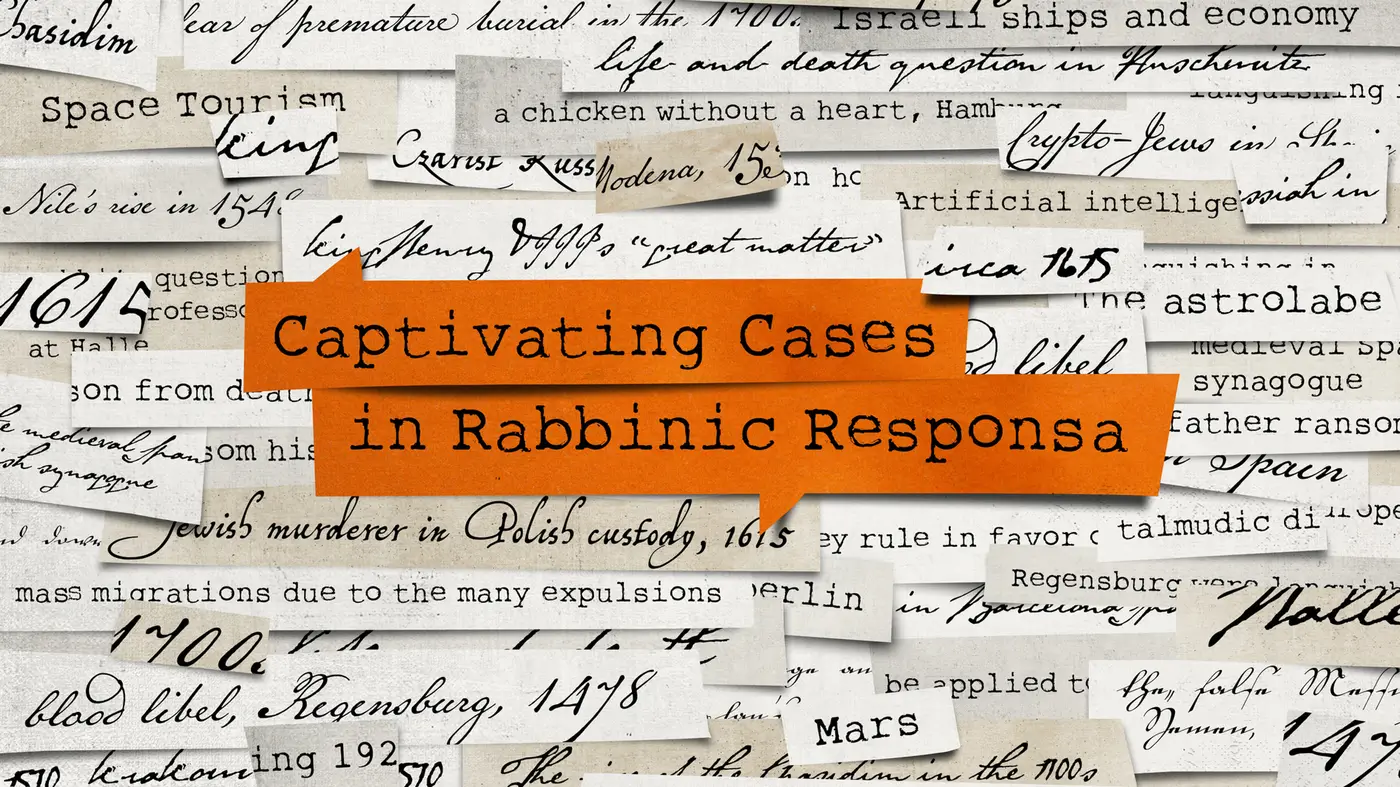
Listen in on the surprising, practical questions your ancestors asked rabbis across Jewish history
Discover the little-known world of rabbinic responsa, the vast archive of real-life questions Jews asked across history—and the scholarly answers rabbis wrote.
In this six-session course, we’ll journey across history through gripping cases and watch how great rabbinic minds think — balancing Jewish law, ethics, human reality, and survival.
Algiers is under siege: May I pray in a bathhouse?
The Inquisition is watching: How will I celebrate Passover?
Seventeen Jews are held hostage after a blood libel: Must I help pay their ransom?
You’ll come away with a new appreciation for how Jewish tradition stays relevant in changing times—and you’ll meet Jewish history in its rawest form. (If you don’t know what a “rabbinic responsa” is, you’ll fit right in.)
COURSE OVERVIEW
What do these questions reveal about our ancestors? What did they think, feel, and value? Explore five fascinating stories to find out.
Cases / Barcelona, 1300; Algiers, 1450; Modena, 1530; Spain, 1450; Auschwitz, 1944
Do sages make assumptions about how reality works, or do they investigate the facts? Follow rabbis as they conduct five fascinating investigations worldwide.
Cases / Cairo, 1548; Altona, 1709; Hamburg, 1772; Jerusalem, 1866; Brooklyn, 1958
See inside the process that enables the Torah’s ancient code to guide life in an ever-changing world. Witness the precise process of applying Talmudic precedent.
Cases / Barcelona, 1300; Valencia, 1380; Pavia, 1478; Berezhany, 1908
Explore four unexpected rulings to uncover the hidden fallback mechanisms within Jewish law: these aren’t exceptions to the law. They’re the law revealing its quiet values (like human dignity and peace in the home).
Cases / Pavia, 1450; Salonika, 1550; Krakow, 1570; Liozna, 1790
Rules don’t always translate into reality easily. See how sages account for the practical, social, and emotional realities around a question to ensure their ruling leads to its intended outcome.
Cases / Cairo, 1173; Barcelona, 1300; Lodmir, 1615; Lubavitch, 1871; Brooklyn, 1954; Manchester, 1963
Could Artificial Intelligence decide Jewish law? Is lab-grown meat kosher? See how Jewish law is addressing the questions posed by tomorrow’s cutting-edge technology.
Cases / Jerusalem, 2003; Maaleh Adumim, 2009; New York, 2015; Beit Shemesh, 2022; worldwide, 2026